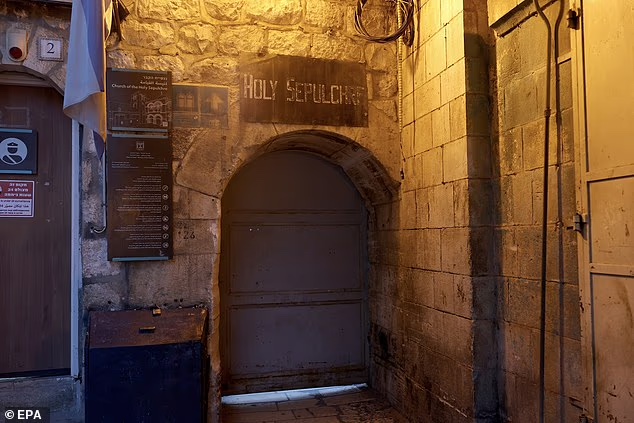
The closure of the Church of the Holy Sepulchre during Holy Week has sent shockwaves through the Christian community, raising concerns that long-held biblical prophecies regarding the Antichrist might be unfolding.
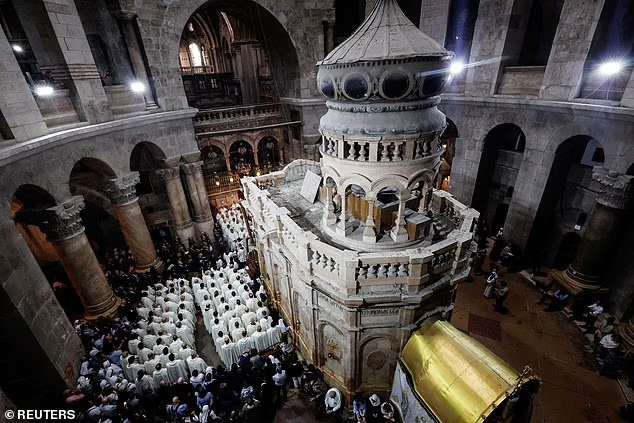
This iconic shrine, commissioned by Roman Emperor Constantine nearly 1,700 years ago, is believed to be the very location where Jesus was crucified, buried, and resurrected.

Source: EPA
Typically teeming with thousands of worshippers and tourists during this sacred week—especially the bustling Holy Saturday Holy Fire ceremony, which draws crowds of up to 10,000—the church now stands silent, its doors shuttered indefinitely. The decision to close this revered site follows a series of Iranian ballistic missile explosions over Jerusalem, which scattered debris across the city, compelling Israeli authorities to restrict access to all holy sites.
While the closure is a direct response to wartime dangers, many observers draw unsettling parallels to the Book of Revelation, where passages hint at a time of turmoil and persecution—particularly in the sacred city where “their Lord was crucified.” Revelation 11 speaks of two prophetic witnesses who preach in this holy city before being slain by a powerful entity referred to as the ‘beast,’ often depicted as the Antichrist.
This enigmatic figure, steeped in Christian theology, is believed to be a master deceiver who will lure many away from the faith in the lead-up to the world’s end. Though the text does not name any specific modern-day events, the current disruption of worship at one of Christianity’s holiest sites during its most sacred week has struck a chord with many. Biblical scholars warn against reading too literally into these passages, cautioning that they are largely symbolic and rooted in early Christian traditions rather than direct forecasts of contemporary events.
In this gripping account, a holy city faces siege while two prophetic figures deliver divine warnings and perform miraculous signs, only to meet gruesome deaths at the hands of the ‘beast,’ followed by their shocking revival and a catastrophic earthquake devastating the city.
Picture Source: Reuters
The Church of the Holy Sepulchre, the second most-visited site in Israel—trailing only the Western Wall—sees over two million visitors each year. Church leaders in the Holy Land have deemed this closure unprecedented; historically, even in times of conflict, worship hasn’t ceased. This closure underscores how rising tensions are encroaching upon even the most sacred and historically resilient religious landmarks in Jerusalem.
Fortunately, there were no casualties or serious damage reported at the church or at the adjacent Temple Mount, a revered site for Muslims and Jews alike, however, police photos captured debris resting on nearby rooftops, alongside a cordon surrounding fragments scattered in the Al-Aqsa compound plaza.
The shutdown has sparked outrage among Christians worldwide, particularly in Greece, where the church holds great significance in the Holy Fire tradition. As Easter approaches, the sacred flame is transported to Athens and shared across the nation, marking Resurrection celebrations that have endured for centuries.
Remarkably, this long-standing house of worship has remained open even amidst previous conflicts, making its current closure particularly poignant. Meanwhile, Israeli soldiers are on guard, ensuring safety as the church, originally built atop a Roman temple dedicated to Venus in 335 AD, stands watch over its profound history. Here, a tomb believed to belong to Jesus, who faced martyrdom nearly 300 years earlier, remains a powerful symbol of faith—a legacy intertwined with a tapestry of challenges that the church has weathered through the ages.