
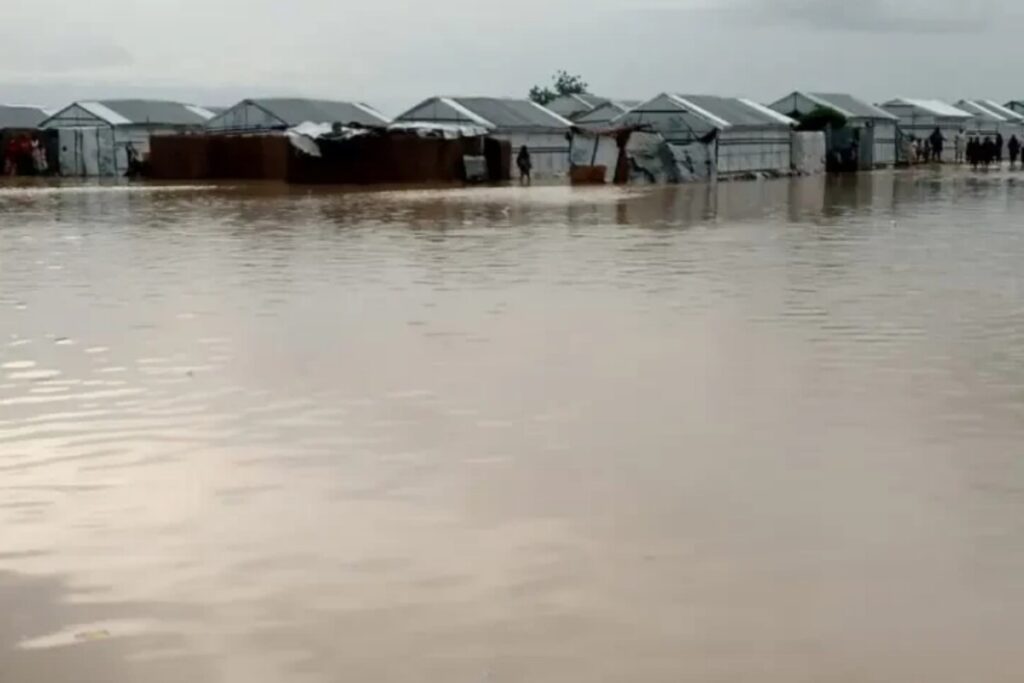
Over 4.4 million Nigerians, according to the United Nations Office for the Coordination of Human Affairs, have been impacted by floods since July 2022.
This was disclosed in the OCHA Flash Update, which was made public on December 14, 2022.
The report also mentioned that the flooding in the nation caused at least 2.4 million people to be displaced, noting that more than half of the displaced people were Bayelsans.
According to the report, “Floods have affected more than 4.4 million people across Nigeria since July, with over 2.4 million people displaced. More than half of these are in Bayelsa State.”
The report highlighted the loss of farmland and bemoaned the possibility of severe food insecurity in the nation as a result.
“Some 676,000 hectares of farmland have been destroyed. The damage to the current harvest and limited access to income risks elevating emergency food insecurity in the coming months,” it read.
The agency stated that “Priority humanitarian needs remain shelter, access to clean water and sanitation, food, health care, and interventions to prevent or address disease outbreaks such as cholera.”
The report read: “As floodwaters recede people move back to their homes, partners are moving from an emergency response towards a recovery response. Many of the humanitarian needs remain the same, including shelter needs, interventions to prevent or address disease outbreaks such as cholera, providing access to food, clean water and sanitation, health care and other essentials.
“Government and humanitarian partners are also coordinating support for the restoration of basic services, including primary health care and water facilities, schools, and other critical infrastructure. Agricultural support – including replacing seeds and tools and other productive assets – is urgently needed to respond to crop losses during the harvest season and to help farmers resume their livelihoods.
“This is critical to address food security and, potentially, malnutrition. A third phase, including measures to improve early warning, preparedness and contingency planning, mitigation, and disaster risk reduction, as well as anticipatory action for next year, is being discussed with authorities to mitigate the worst effects and enhance people’s resilience to future disasters.”