

































































The countries are Afghanistan, Burkina Faso, Ethiopia, Kenya, Mali, Niger, Nigeria, Somalia, Sudan, South Sudan, Chad and Yemen.
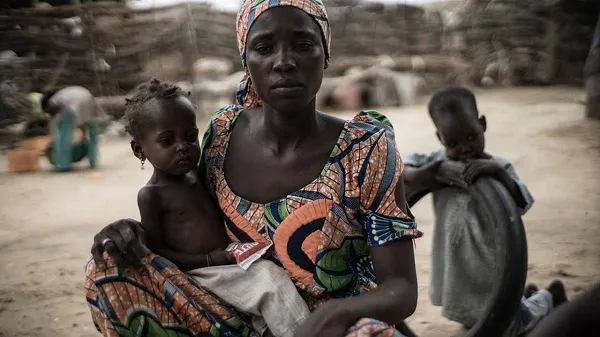
The UNICEF report, based on data analysis of women in nearly every country in the world, estimates that more than one billion women and adolescent girls suffer from undernutrition — which leaves them underweight and of short stature — and from a deficiency in essential micronutrients as well as from anemia.
Most of them are in the world’s poorest regions, with South Asia and sub-Saharan Africa constituting 68 percent of women and adolescent girls who are underweight and 60 percent of those suffering from anemia.
These nutritional deficiencies have an impact not just on the well-being of the women but also affect their children, said UNICEF, noting that “poor nutrition is passed down through generations.”
Malnutrition increases the risk of neonatal death, but can also “impair fetal development, with lifelong consequences for children’s nutrition, growth, learning and future earning capacity.”
“Globally, 51 million children under two years are stunted. We estimate that about half of these children become stunted during pregnancy and the first six months of life, when a child is fully dependent on the mother for nutrition,” the UNICEF report said.
It estimates that between 2020 and 2022, the number of pregnant or breastfeeding women suffering from acute malnutrition increased by 25 percent, from 5.5 to 6.9 million, in the 12 countries deemed to be in food crisis.
“Without urgent action from the international community, the consequences could last for generations to come,” said UNICEF chief executive Catherine Russell in a statement.
“To prevent undernutrition in children, we must also address malnutrition in adolescent girls and women,” she said.
UNICEF called for priority to be given to women and girls in terms of access to nutritious food, and to implement mandatory measures to “expand large-scale food fortification of routinely consumed foods such as flour, cooking oil and salt to help reduce micronutrient deficiencies and anemia in girls and women.”
AFP