























































Ezekiel 18:25-28
Psalm 24(25):4-9
Philippians 2:1-11
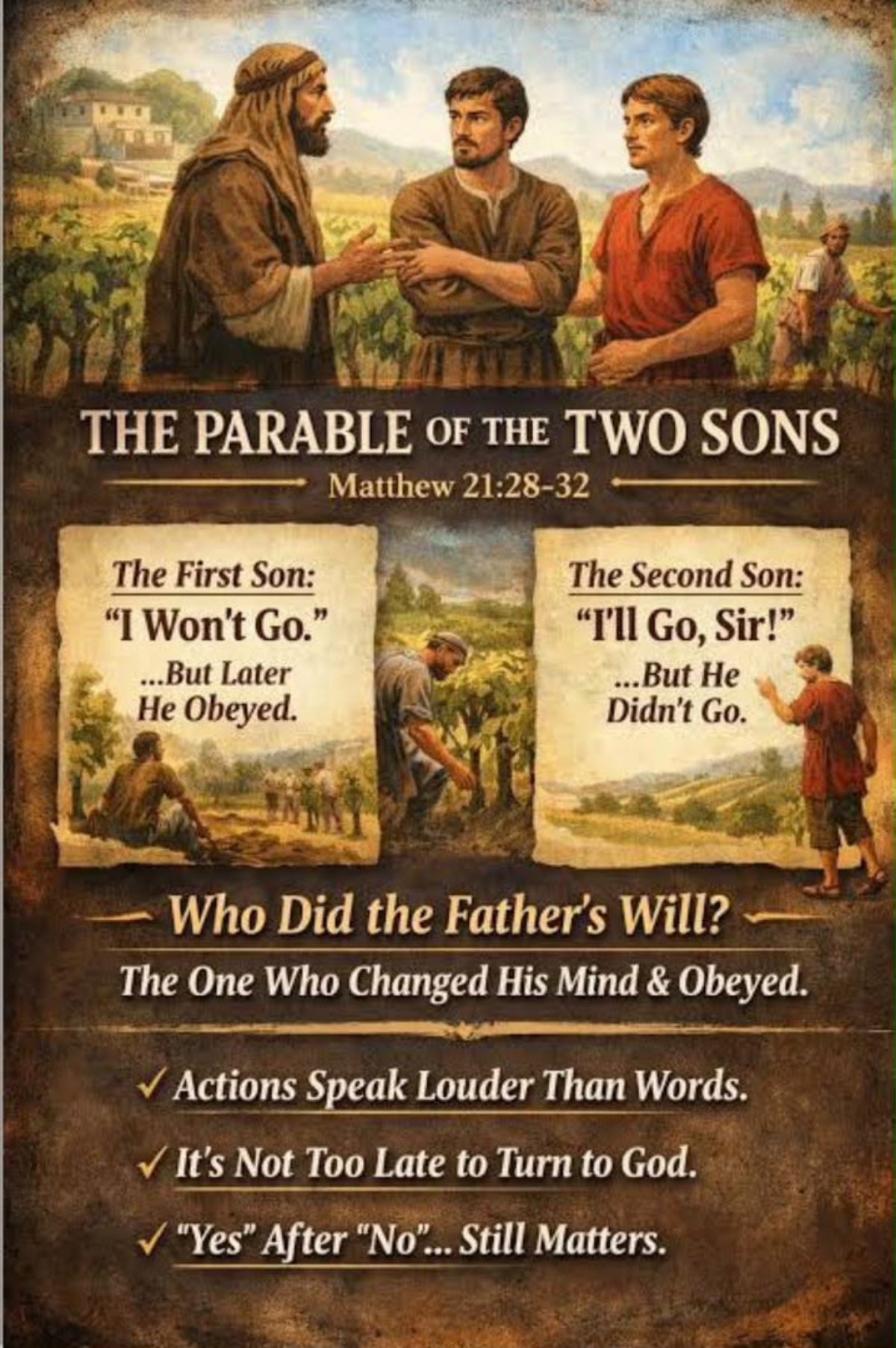
Matthew 21:28-32
The pattern of true righteousness
The parable in today’s Gospel is one that all of us can easily relate to. As parents, babysitters, supervisors, managers, or priests – we have all known someone who agrees to do something but then fails to follow through, while someone else protests but then goes ahead and completes the task. When we reflect on ourselves, we can find examples of how we have acted like both sons described in the story. Sometimes we argue or grumble and then do what is right. More often, we make grand promises to God, friends, employers, or neighbors in need about what we will do, only to neglect actually doing anything.
Doing God’s will requires an act of our human will. Most of us find it very difficult to undertake tasks that demand a lot of willpower. Improving our fitness, losing weight, completing assignments on time, or keeping the house tidy all require sustained effort and perseverance. Training ourselves spiritually demands as much determination. Fortunately, in our Christian life, we have an advantage — we are aided by the Holy Spirit to keep moving toward salvation. We know that the victory has already been won by Christ. Because Jesus was fully human and fully divine, His life demonstrates that total human commitment to God’s will is possible.
The obedience of saints and contemporary Christians in difficult circumstances has enabled them to do with courage, joy, and peace what we often find overwhelming and demanding. Notice that an unfashionable word has entered: obedience. Doing what God instructs us to do. We live in a disobedient world where we resent anything that limits our freedom. Yet today’s second reading offers a new perspective on obedience. Saint Paul says, “In your minds you must be the same as Christ Jesus…” The Son’s obedience to the Father led Him to accept death on a cross. But “God raised him on high and gave him the name which is above all other names.” Jesus, the obedient servant, perfectly fulfilling the Father’s will, is honored as Christ the Lord.
Today’s readings invite us to accept a paradox. In the words of the Catechism: “The more one does what is good, the freer one becomes.” There is no true freedom except in serving what is good and just. The choice to disobey and do evil is an abuse of freedom and results in ‘the slavery of sin’ (1733). By embracing and doing God’s will, we gain freedom and help advance God’s kingdom. Conversely, rejecting God risks forming habits that could be eternally destructive.
But we must be cautious not to say “yes” and do nothing. As Cardinal Newman warned, “How many there are who sit still with folded hands, dreaming, doing nothing at all, thinking they have done everything…when they have merely had these good thoughts, which will save no one!” (Parochial and Plain Sermons I.13)
Fr Joseph Osho