
































































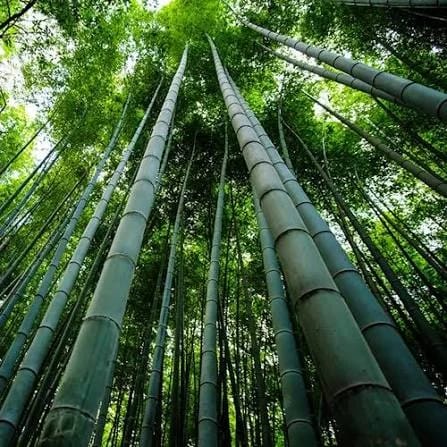
While Nigeria’s economic diversification debate has long focused on oil, agriculture, and tech, one renewable resource growing across our forests and riverbanks could hold the key to transforming the nation’s sports industry: Bamboo.
Despite being abundant in the South and Middle-Belt, bamboo remains one of Nigeria’s most underutilised resources. In many communities it’s still used only for fencing, scaffolding, and firewood. Yet in countries like China, India, Indonesia and Vietnam*l, bamboo has become a multi-billion-dollar industrial material powering furniture, textiles, and increasingly, high-performance sports equipment.
Nigeria imports almost all its sporting goods — football boots, running shoes, jerseys, tracksuits, shin guards, gym equipment. This dependence drains foreign exchange and leaves sports institutions vulnerable to exchange rate swings.
Bamboo offers a locally-sourced alternative.
Through modern fibre-processing technology, bamboo can be turned into soft, breathable, moisture-wicking fabrics perfect for jerseys, tracksuits, socks and towels. Its natural antibacterial, odour-resistant properties make it ideal for Nigeria’s tropical climate and for athletes in high-performance training.
Beyond apparel, engineered bamboo composites can be used for:
– Footwear: canvas shoes, football boots, running shoes, spike shoes, insoles
– Protective gear: shin guards, padding
– Training equipment: agility hurdles, balance boards, gym flooring, table tennis blades, canoe paddles, archery equipment
A thriving bamboo industry would create jobs across the entire value chain:
1. Farmers: Commercial bamboo cultivation
2. Processors: Fibre extraction and composite factories
3. Manufacturers: Textile, footwear, and sports equipment companies
4. Support: Designers, engineers, marketers, exporters, logistics, retailers
Instead of exporting raw bamboo and importing finished goods, Nigeria can build a complete “Bamboo-to-Sports Manufacturing Value Chain” for domestic use and export under the African Continental Free Trade Area, AfCFTA.
The environmental advantage is also huge. Bamboo matures in a few years, regenerates naturally, and absorbs large amounts of CO2 — giving Nigerian-made products a strong edge as global consumers demand sustainable goods.
The author argues that government policy will be decisive. A National Bamboo Development Policy should cover:
– Incentives for commercial plantations
– Support for fibre-processing, textile and footwear industries
– Research funding and quality assurance
– Affordable financing for entrepreneurs
– Export promotion
Universities and polytechnics should also launch interdisciplinary programs combining *sports science, textile engineering, industrial design and forestry* to develop bamboo products tailored for African athletes and climate.
“History shows that nations achieve industrial transformation by converting overlooked natural resources into globally competitive industries. Nigeria has the opportunity to do exactly that through bamboo.”
The dream: The next generation of football boots, spike shoes, jerseys and gym equipment proudly bearing “Made in Nigeria” — made from locally processed bamboo.
“Bamboo is far more than a plant growing in our forests. It is an industrial resource, an environmental asset, and a strategic opportunity. If Nigeria is serious about diversifying its economy, creating jobs, and building a globally competitive sports industry, bamboo should become a foundation of Nigeria’s future sports manufacturing revolution.”