

























































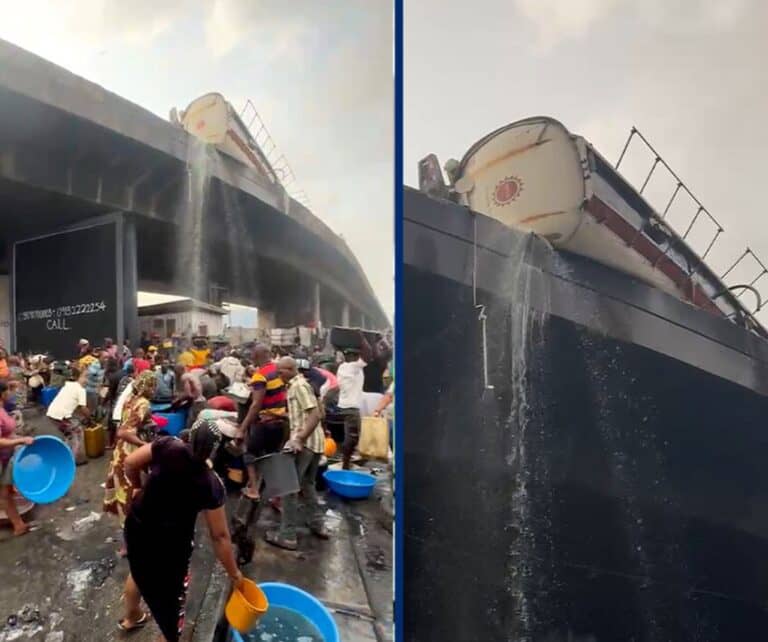
Early Monday morning, on Liverpool Bridge in Apapa, a diesel-laden tanker toppled, sending a geyser of fuel across the roadway. Within minutes, crowds from Ajegunle, Olodi‑Apapa, and nearby neighborhoods swarmed the scene, clutching bowls, jerrycans, and buckets to scoop the leaking diesel—despite the obvious fire‑and‑explosion hazard.
Eyewitnesses say the tanker’s aisle gave way, puncturing its tank and spilling fuel onto the bridge’s edge. As the liquid spread, residents rushed beneath the bridge to collect it, creating a chaotic, near‑death tableau that has become all too familiar on Lagos’s busy corridors.
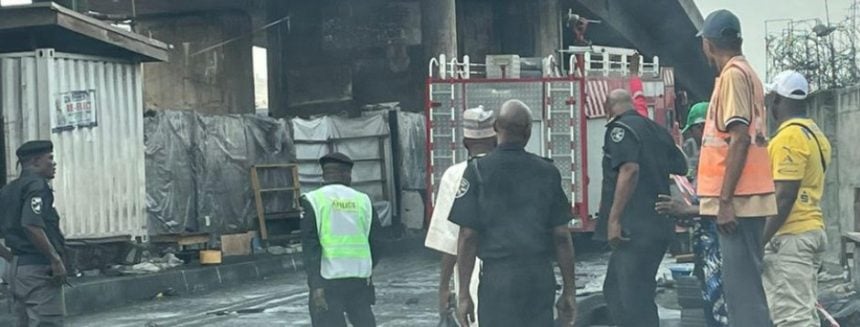
Emergency responders from LASTMA, the Lagos State Fire Service, and the Nigerian Police quickly cordoned off the area, diverted traffic to a counter‑flow lane, and began neutralising the spill. “It’s well under control,” Transportation Commissioner Oluwaseun Osiyemi told reporters, confirming that the road has since been reopened after the diesel was contained and the tanker prepared for towing.
Authorities have repeatedly warned that scooping spilled fuel can trigger catastrophic explosions—a danger underscored by past tragedies across Nigeria. Yet, the allure of free fuel continues to draw crowds, prompting officials to urge the public to stay clear of such scenes and allow trained crews to handle the hazardous material.