




























































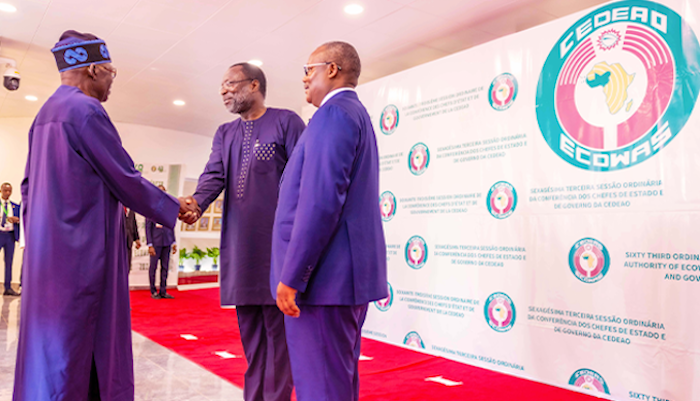
Nigeria and the ECOWAS Court discuss reforms to address weak enforcement, urging stronger compliance and regional accountability.
Calls for sweeping reforms and firmer compliance dominated a high-level bilateral meeting between Nigeria and the ECOWAS Court of Justice, as both sides acknowledged that weak enforcement of judgments threatens the credibility of regional justice in West Africa.
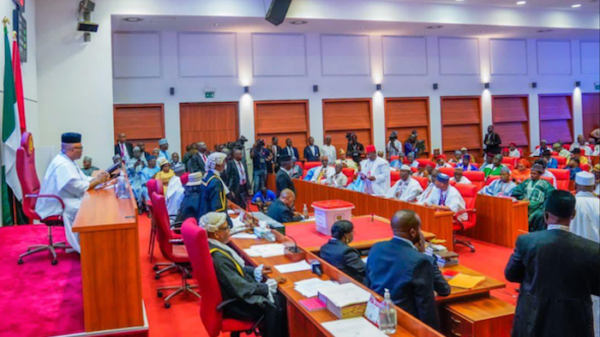
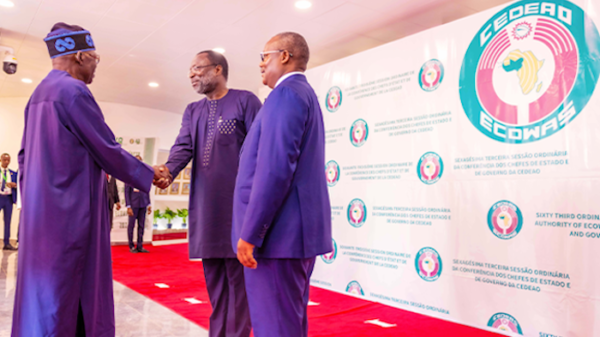
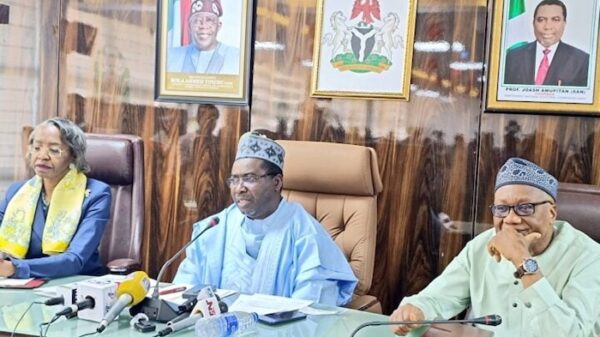
The meeting, held as part of activities marking the 50th anniversary of the Economic Community of West African States, brought together Nigeria’s Attorney-General of the Federation, Prince Lateef Fagbemi, judges of the Court, representatives of the Nigerian Bar Association and senior government officials.
At the heart of the discussions was a shared but urgent concern: how to ensure that judgments of the ECOWAS Court move beyond declarations to actual implementation.
In a firm but diplomatic address, the President of the ECOWAS Court, Hon. Justice Ricardo Gonçalves, stressed that enforcement of its decisions is not a political choice but a binding obligation under the Revised ECOWAS Treaty and related protocols.
The Court reminded Nigeria that its judgments are final, binding and immediately enforceable on Member States, Community institutions and individuals.
Failure to comply, the President warned, erodes the authority of the Court, weakens the regional legal order and diminishes citizens’ confidence in justice at a time when many approach the Court as a last resort.
He said: “Without enforcement, the decisions of the ECOWAS Court become merely declaratory,” cautioning that declaratory justice without practical effect undermines the transformative vision of regional integration.
He disclosed that since its establishment, 128 cases have been instituted against Nigeria. Of that number, 66 have been closed, 10 executed, while 52 remain pending enforcement.
He noted that though this should serve as a basis for reflection rather than censure, the figures underscored the scale of the compliance gap particularly for Nigeria, a founding member and the bloc’s largest economy.
Responding, Attorney-General Fagbemi acknowledged the enforcement deficit but situated the problem within broader institutional challenges facing regional and international courts.
He noted the ECOWAS Court lacks direct enforcement powers and relies heavily on the goodwill of Member States a structural limitation common to many supranational tribunals.
Fagbemi also highlighted sovereignty concerns, political sensitivities in human rights and governance cases, administrative and budgetary constraints especially where judgments involve financial compensation and weak coordination among national institutions.
Beyond national challenges, he argued the general institutional weakness of ECOWAS itself has contributed to compliance difficulties.
“Limited political authority, dependence on voluntary compliance and inconsistent enforcement across sectors have created a perception of soft power,” he said, warning that when ECOWAS decisions in trade, security or governance are inconsistently applied, it sets a precedent that affects respect for judicial rulings.
According to him, strengthening the Court cannot be separated from strengthening ECOWAS as a whole.
Despite the frank exchanges, both sides framed the meeting as an opportunity for institutional renewal rather than confrontation.
Fagbemi proposed reforms aimed at improving acceptance and enforceability of judgments, including: Establishment of a regional supervisory oversight mechanism to monitor compliance and apply political pressure; Introduction of an appellate or review process to address concerns over finality of judgments; Structured compliance hearings and follow-up reporting obligations; Clearer enforcement protocols and possible cooperation agreements similar to other international courts.
He also noted the absence of an appellate process sometimes fuels perceptions of rigidity, particularly in politically sensitive cases or where substantial financial awards are involved.
On its part, the Court outlined measures already taken to improve compliance, including the creation of a dedicated Enforcement Division within its Registry, regular dialogue with designated national authorities, setting deadlines for compliance within judgments, and reporting enforcement status to ECOWAS political organs.
However, the Court conceded that existing mechanisms may be insufficient and called for deeper cooperation with Nigeria to develop sustainable solutions.
Significantly, the Court framed Nigeria’s role not merely as that of a respondent state but as a regional leader capable of setting the standard for compliance.
Describing Nigeria as a founding pillar, economic engine and diplomatic anchor of ECOWAS, the President of the Court urged it to assume an exemplary role in enforcing judgments.
“If Nigeria leads by example,” the President noted, “it will strengthen the authority of the Court, encourage other States to follow, and consolidate its position as a normative reference in West Africa.”
Fagbemi, in turn, reaffirmed Nigeria’s commitment to the rule of law and regional integration, stressing that integration without justice would be fragile.
As ECOWAS marks five decades of existence, the bilateral meeting signaled a pivotal moment for the regional justice system.
Both Nigeria and the Court agreed that enforcement challenges stem not only from unwillingness but from structural, institutional and operational gaps from coordination failures and budgetary hurdles to limited use of ECOWAS’ sanctions regime.
Yet the consensus was clear: compliance with Community law is essential to sustaining integration, stability and credibility.