



































































House pledges rigorous scrutiny as Tinubu transmits first executive bill on state policing
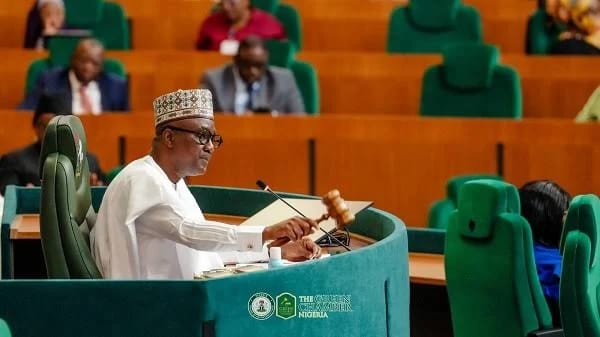
The Speaker of the House of Representatives, Tajudeen Abbas, has assured Nigerians that the proposed constitutional amendment to establish state police contains safeguards to prevent governors from turning the new security outfits into political tools. Speaking on Wednesday at the National Security Roundtable during the 2026 National Assembly Open Week in Abuja, he said the reform is designed to strengthen community policing while preserving national oversight.
Abbas described the proposal as one of the most consequential constitutional reforms before the National Assembly, noting it marks the first time a sitting President has formally transmitted an executive bill seeking to establish state police. He commended President Bola Tinubu for taking concrete legislative action after decades of debate. “For the first time in our history, a sitting president has made state police a central part of national reform. He has done so not with words alone, but with a bill that now sits before the House of Representatives,” he said.
Addressing concerns that governors could abuse state police, the Speaker said the bill deliberately incorporates constitutional checks. “I understand the fear that state police could become the private army of a governor or a political godfather,” Abbas stated. Under the proposal, the Nigeria Police Force would be renamed the Federal Police Service. States that choose to establish police must pass laws through their Houses of Assembly and meet national minimum standards prescribed by the National Assembly before operations begin.
The Speaker explained that Commissioners of Police would be appointed on the recommendation of the National Police Council, confirmed by state legislatures, and could only be removed by a two-thirds majority of the House of Assembly for just cause. The Federal Police would retain responsibility for terrorism, border security, federal offences, and policing the FCT. Crucially, the amendment empowers the Federal Police to intervene if a state police service collapses or is unlawfully deployed, subject to legislative notification and judicial oversight. “If a State Police breaks down, or falls into the wrong hands, the Constitution allows the federal police to step in,” he added.
Abbas argued that Nigeria’s size and security challenges have exposed the limits of a centrally controlled police force. With over 200m people, banditry, kidnapping, farmer-herder clashes and attacks on schools require local knowledge and faster response. “A country as large and as varied as ours cannot be policed forever by one central Force run from the capital,” he said.
The Speaker advocated a phased implementation, warning against launching police services in all 36 states at once. “We should move step by step, state by state, learning as Germany and Canada learned,” he counselled. He also stressed that states must not create forces they cannot fund. “We must settle the question of money from the very beginning, so that no state creates a police force it cannot pay, and no unpaid officer becomes a threat to the citizen he has sworn to protect.”
Drawing from Germany, Canada, India and the US, Abbas said successful decentralised policing depends on national standards, integrated intelligence and accountability. He called for a national criminal and biometric database, better intelligence sharing, stronger borders, and improved welfare for personnel. The House, he said, will subject the bill to rigorous scrutiny to balance internal security with democratic safeguards. “Let us build a police service that protects the citizen in the smallest village as faithfully as it protects the powerful in our cities,” Abbas concluded.