




























































On Thursday, June 9, the Economic and Financial Crimes Commission’s Cybercrime Section presented forensic reports in the case of singer Azeez Fashola a.k.a. Naira Marley, who was accused of credit card fraud before the Ikoyi Federal High Court.
According to Whyte Dein, the Section’s Chief Detective Officer, his team’s investigations found that the defendant was involved in credit card fraud.
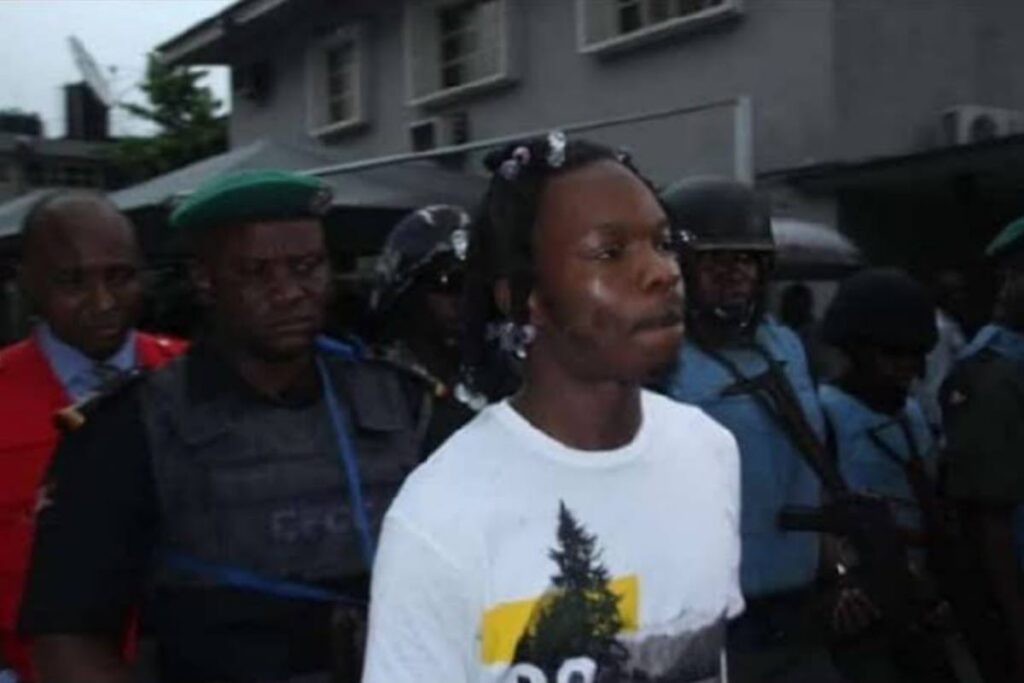
The singer was charged with 11 counts of credit card fraud in violation of the Money Laundering (Prohibition) Act and the Cyber Crimes Act.
The singer allegedly committed these crimes between November 26 and December 11, 2018, and also on May 10, 2018. He was charged and arraigned on May 20, 2019, but was released on bail.
Dein, who was led in evidence by EFCC lawyer Rotimi Oyedepo on Thursday, June 9, told Justice Nicholas Oweibo that they detected communications on the defendant’s iPhone with one Raze who sought for credit card information.
He said, “One of our findings from the forensic report shows the exchange of chat messages with several persons when the defendant sent credit card details, including card numbers and expiration dates. Visa card details were one of those sent by the defendant to a certain person known on his contact list as Raze. This message sent Visa Card details to Raze, after which Raze replied that the card was not valid.
“We were able to establish through investigation the previous messages he sent with a wrong card that was indeed not valid. We then repeated the same process a second time which was now valid.”
Dein further revealed that the singer accessed illegal networks using a multi-lingual browser.
He said: “The defendant used malicious tools to disguise the identity and location of the user of the laptop when connected to the internet along with the presence of the Top Browser which acted as a single gateway to the dark net. This gave us a reasonable ground to suspect that the defendant had been engaging in fraudulent card activities. And this was established through a reply to our request to Visa Western Union Card.”
“The types of sites most commonly associated with the dark web are marketplaces where illicit goods such as narcotics, firearms, and stolen credit card numbers are bought and sold. The darkest corners are used to hire hitmen, engage in human trafficking, and exchange child pornography.”
On October 3, 2019, during the proceedings, another forensics expert, Buru Buhari, told the court that his investigations uncovered stolen card numbers from European, American, and Latin American banks on the singer’s laptop.
The investigations revealed the defendant’s involvement in cyber fraud, according to Dein. The defence attorney, Olalekan Ojo, SAN, protested, claiming that only the court could decide.
The case was postponed until July 13 for the ruling and July 15 for the trial to resume.