



































































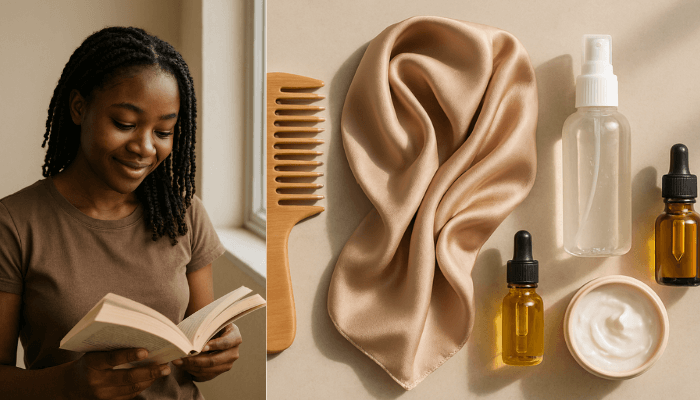
Many people spend a fortune on expensive shampoos and serums, yet they overlook the eight hours of friction their hair endures every single night. Your sleep environment can either be a sanctuary for your strands or a source of constant breakage. Implementing the best evening hair care routines is the secret weapon for anyone looking to maintain length and health. Since hair is most vulnerable when we are tossing and turning, your nighttime habits are just as important as your daytime styling.
The Friction Factor
The standard cotton pillowcase is actually quite abrasive to the hair cuticle. As you move during the night, the cotton fibers “grab” your hair, causing tiny tears and tangles that lead to split ends. One of the most effective shifts you can make is switching to a silk or satin pillowcase. These smooth surfaces allow the hair to glide effortlessly, significantly reducing mechanical damage. Furthermore, silk doesn’t absorb moisture like cotton does, meaning your natural oils—and your expensive leave-in conditioners—stay in your hair where they belong.
Strategic Styling for Sleep
How you “wear” your hair to bed matters immensely. Sleeping with your hair down often leads to a “nest” of tangles by morning, which requires aggressive brushing that causes further breakage. Conversely, a tight ponytail can lead to traction alopecia or thinning at the temples. The best evening hair care routines usually involve a “pineapple” bun (a loose gather at the very top of the head) or a loose braid. Using a silk scrunchie instead of a traditional elastic band ensures there is no harsh “dent” or tension on the hair shaft while you rest.
Moisture and Scalp Health
Nighttime is the ideal window for deep hydration. Because you aren’t exposed to sun, wind, or pollution, your hair can fully absorb nourishing treatments. Applying a light hair oil or a water-based mist to your ends before bed helps seal the cuticle and prevent overnight dehydration.
Don’t forget the scalp; a quick two-minute scalp massage before you lay down can stimulate blood flow to the follicles, encouraging growth. By turning these small actions into a consistent ritual, you ensure that your hair is being repaired while you sleep, rather than being damaged. Over time, these habits will manifest as thicker, stronger, and more resilient hair