





















































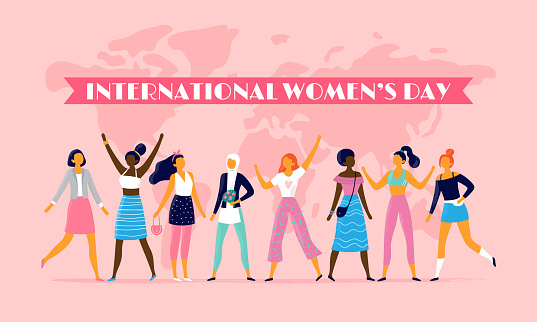
While there have been major advances in dozens of countries, the situation in places such as Afghanistan and Iran and the constant crimes and violations in nearly every nation in the world are a cold reminder that there is still a long road ahead.
On Monday, United Nations Secretary-General Antonio Guterres note that women’s rights are being “abused, threatened and violated” around the world and gender equality won’t be achieved for 300 years on the current track. He said that progress won over decades is vanishing because “the patriarchy is fighting back.”
The day is commemorated in different way and degrees in different countries.
In Spain, more than 1 million people are expected to take the streets in raucous evening demonstrations in Madrid, Barcelona, and every Spanish city. Big rallies are also expected in many other cities around the world, while in some countries only minor events are held.
Women gathered Wednesday for rallies in Pakistan’s major cities, including the capital, Islamabad, amid tight security. Organizers said they would be peaceful and that the marches are only aimed at seeking rights guaranteed by the constitution.
Some conservative groups last year threatened to stop simar marches by force. But this year Pakistani officials have beefed up security to protect the marchers. Pakistan is a conservative country where women often do not feel safe in public places because of open harassment.
In neighboring Afghanistan, since the Taliban takeover in 2021, the country has become the most repressive in the world for women and girls, the United Nations said Wednesday.
In a statement released Wednesday, the U.N. mission said that Afghanistan’s new rulers have shown an almost “singular focus on imposing rules that leave most women and girls effectively trapped in their homes.”
They have banned girls’ education beyond sixth grade and barred women from public spaces such as parks and gyms. Women are also barred from working at national and international nongovernmental organizations and ordered to cover themselves from head to toe.
Roza Otunbayeva, special representative of the U.N. secretary-general and head of the mission to Afghanistan said that “it has been distressing to witness their methodical, deliberate, and systematic efforts to push Afghan women and girls out of the public sphere.”
In other regions, major advances have been made for women in the areas of equality, reproduction rights, laws to try to eliminate gender and sexual violence, and moves toward equal pay, gender parity and shared domestic chores.
Spain on Tuesday passed a new Parity Law requiring that women — and men — make up at least 40% of the boards of directors of listed companies and private companies with more than 250 workers and 50 million euros in business. The same will also apply to Spain’s Cabinet.
The bill also proposes to oblige political parties to have equality in their electoral lists, with names of men and women alternating.
Leftist governments have put women’s rights in the vanguardover the past two decades with far-reaching laws on abortion, menstrual leave and improved maternity and paternity leave, among others.
But Tuesday also saw the current leftist coalition — with 14 women and nine men in its Cabinet — facing its toughest test in three years in power, with the two ruling parties at loggerheads over reforming their own pioneering sexual violence law that has inadvertently led to the reduction of sentences for over 700 offenders and caused national outrage.
While many countries have made similar advances, especially in Europe, other like the United States, which ended the constitutional right to abortion last year, has seen restrictions return to many states in what is a major step backward, according to many women.