
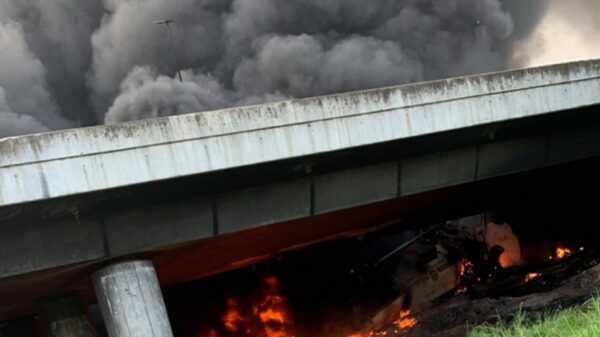






























































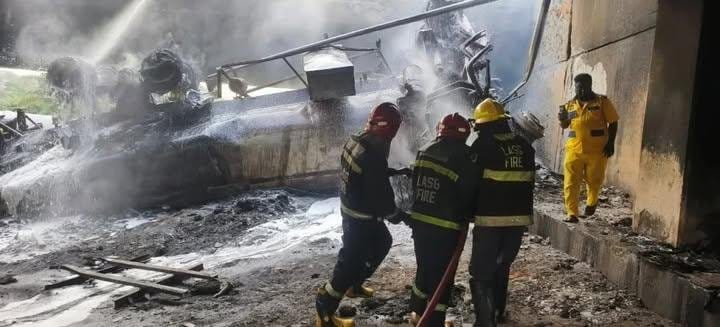
There was panic on the Lagos-Ibadan Expressway on Monday afternoon after a diesel-laden tanker crashed and exploded under the Otedola Bridge.
The Federal Road Safety Corps (FRSC), Lagos Sector Command, has blamed the inferno on speeding.
According to a statement by the Sector Public Education Officer, Elizabeth Jayeola, the lone crash occurred at about 4:10 p.m. on Monday, October 19, 2026, on the outward section of the expressway when the tanker plunged into the underpass beneath Otedola Bridge and went up in flames.
The FRSC said its rescue unit received the report at 4:15 p.m. and arrived at the scene at 4:20 p.m.
“A lone crash involving a diesel-laden tanker on the outward section of the Lagos–Ibadan Expressway plunged the tanker into the underpass beneath Otedola Bridge, triggering a raging inferno today, at approximately 4:10 p.m.,” the statement said.
“The incident underscores the potentially catastrophic consequences of excessive speed, particularly among operators of heavy-duty vehicles transporting petroleum products.”
Preliminary findings identified speeding as the cause. Two adult male occupants sustained injuries and were rushed to the Lagos State Accident and Emergency Centre. No death was recorded in the initial report.
FRSC personnel worked with the Lagos State Fire and Rescue Service, LASTMA, Police and other emergency responders to contain the fire, manage traffic and prevent further damage to road users and infrastructure.
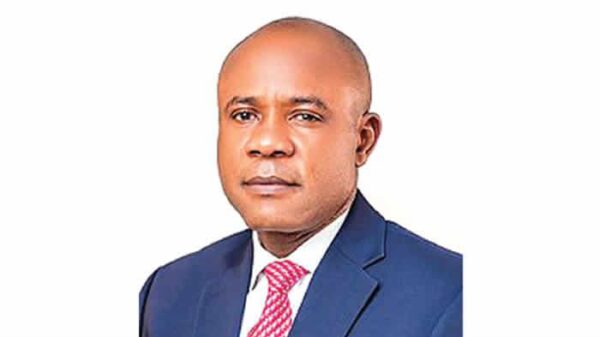
Reacting to the incident, FRSC Lagos Sector Commander, Corps Commander Kehinde Hamzat, warned that speeding remains a major threat to road safety, especially for tankers carrying petroleum products.
“A tanker carrying diesel or other petroleum products requires disciplined speed management, adequate following distance, sound vehicle maintenance and strict compliance with road safety regulations. Its considerable mass, braking requirements and hazardous cargo can magnify the consequences of a loss of control or collision,” he said.
He cautioned tanker drivers against speeding and reckless driving, stressing that operating an articulated vehicle goes beyond meeting delivery schedules — it includes protecting lives and property.
He also urged fleet operators and tanker owners to intensify driver retraining, enforce realistic journey schedules, maintain proper vehicle inspection and ensure compliance with speed limits.
The Corps advised motorists approaching emergency scenes to reduce speed, obey traffic control instructions and avoid obstructing rescue workers, while warning members of the public against crowding around burning tankers to take photos or videos.
“Road safety is a shared responsibility,” Hamzat added.