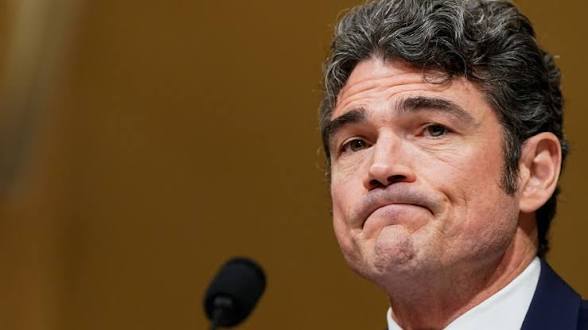





































































A Federal High Court sitting in Abuja has thrown out the fundamental rights enforcement lawsuit brought by Tigran Gambaryan, the detained former Binance executive, who had contested the legality of his 2024 detention by the Office of the National Security Adviser (NSA) and the Economic and Financial Crimes Commission (EFCC).
While delivering the judgment on Thursday, November 27, the presiding judge, Justice Mohammed Umar, held that the action constituted an abuse of court process, emphasizing that the NSA operated within its legal mandate and that “no court can restrain investigative agencies from carrying out their lawful duties.”
Gambaryan, who until recently was Binance’s head of financial crime compliance, instituted the suit numbered FHC/ABJ/CS/356/2024 through his counsel, Tonye Krukrubo. In the application, he complained of unlawful and extended detention and alleged that Nigerian authorities were holding him “as leverage to continue making demands on Binance.” He informed the court that he travelled to Nigeria on February 26, 2024, together with his colleague Nadeem Anjarwalla, in response to an invitation extended by the NSA and EFCC, only to be detained even though he was not a director of the cryptocurrency company. Anjarwalla subsequently escaped from custody and left the country.
Krukrubo had prayed the court to declare the detention of his client from February 26 to 27, and again from March 12 to April 8, 2024, unconstitutional and to compel the respondents to tender a public apology and pay damages. However, counsel for the NSA and EFCC urged the court to strike out the suit, arguing that the suit was designed to frustrate the ongoing criminal prosecution in charge number FHC/ABJ/CR/138/2024 before Justice Emeka Nwite, where Binance Holdings Ltd faces counts of money laundering and foreign exchange offences.
EFCC lawyer Olanrewaju Adeola submitted that Gambaryan’s detention during the periods complained of was backed by a valid remand warrant, pointed out that the applicant had already been arraigned before Justice Nwite (who rejected his bail request on the basis that he was a flight risk), and insisted that the fundamental rights application was a calculated effort to meddle in active criminal proceedings.
In the judgment, Justice Umar ruled that the court would not “interfere” with the statutory investigative and prosecutorial functions of Nigerian agencies merely under the guise of protecting fundamental rights, especially in cases touching on suspected foreign exchange breaches and money laundering. The judge observed that criminal charges had already been preferred against Binance earlier in the year and that the affidavits placed before the court established that the NSA’s actions were triggered by intelligence indicating alleged illegal financial operations connected to the platform.
Umar further stated that although fundamental rights are enshrined in the Constitution, “they are not absolute and may be curtailed in circumstances involving national security or ongoing criminal investigations.” Consequently, the entire suit was dismissed.
A Gentle Reminder: Every obstacle is a stepping stone, every morning; a chance to go again, and those little steps take you closer to your dream.
Nnamdi Okoli